The AI Blueprint for Construction’s Future: Inside the Rise of MCP (Model Context Protocol)
.avif)
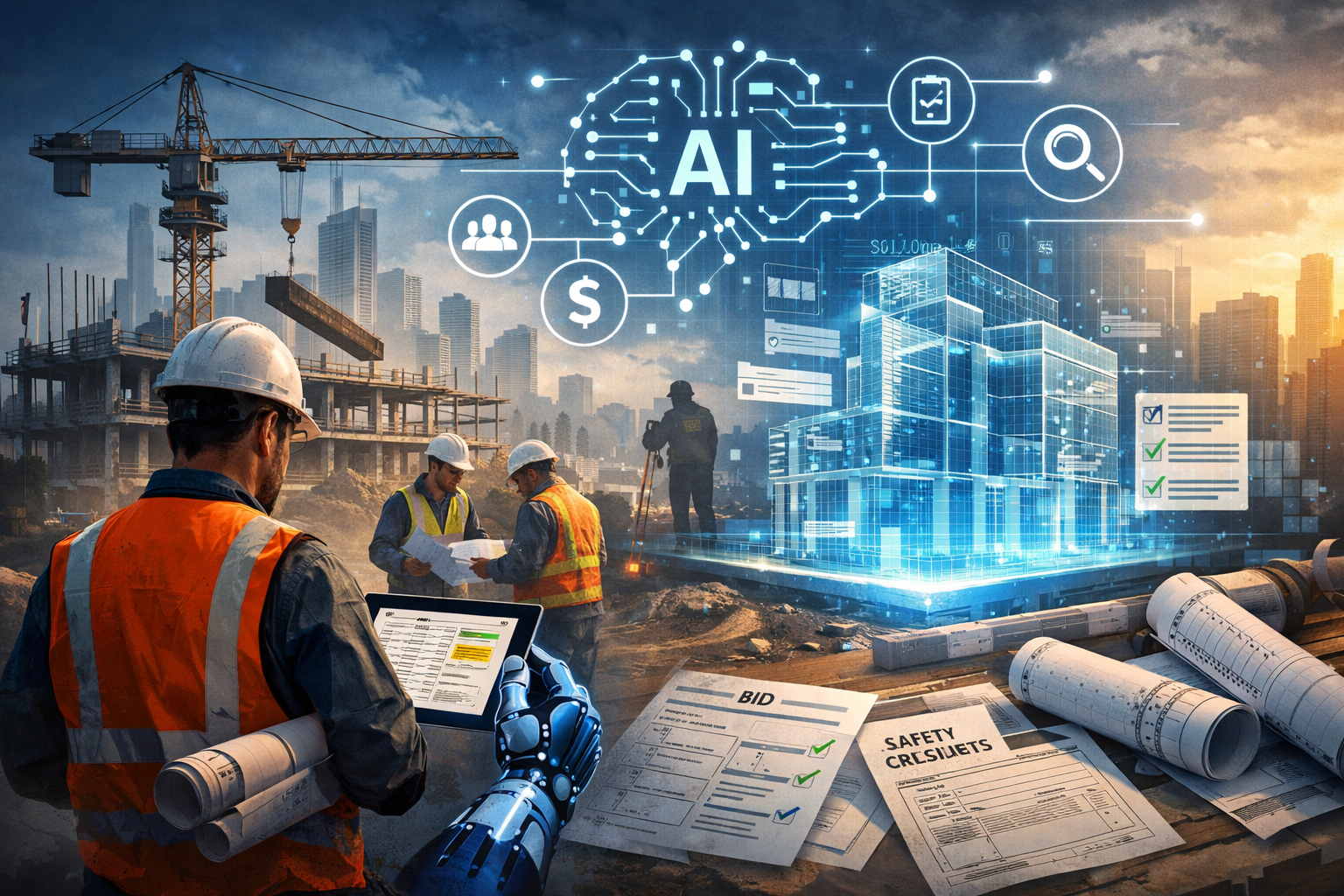
The construction industry is undergoing a major shift as AI meets traditional workflows. At PELLES.AI, We’ve seen how the Model Context Protocol (MCP) is transforming subcontractor use of tools like Procore and ACC, enabling smarter, automated project execution and tackling key industry challenges.
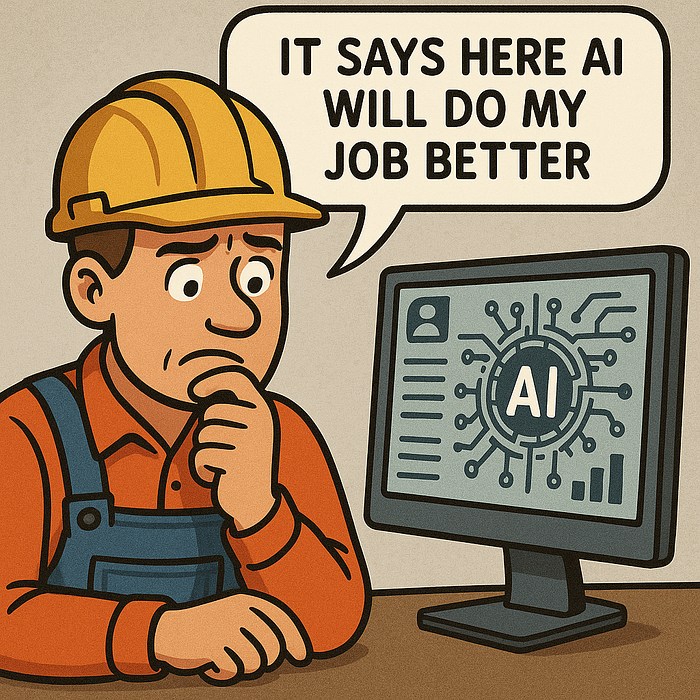
Model Context Protocol, introduced by Anthropic in November 2024, serves as the “USB-C of AI applications,” providing a standardized way for AI systems to connect with external data sources and tools. For subcontractors, this means their existing investments in platforms like Procore and ACC can now be seamlessly integrated with state-of-the-art large language models, creating intelligent agents that understand construction context and can automate complex workflows.
Subcontractors face a unique set of operational challenges that directly impact their profitability and competitive advantage. The construction industry’s complexity, combined with tight margins and increasing project demands, creates an environment where efficiency gains translate directly to business success. Current statistics reveal that 80% of construction projects experience cost overruns or delays, with much of this attributed to pre-construction errors and coordination issues.
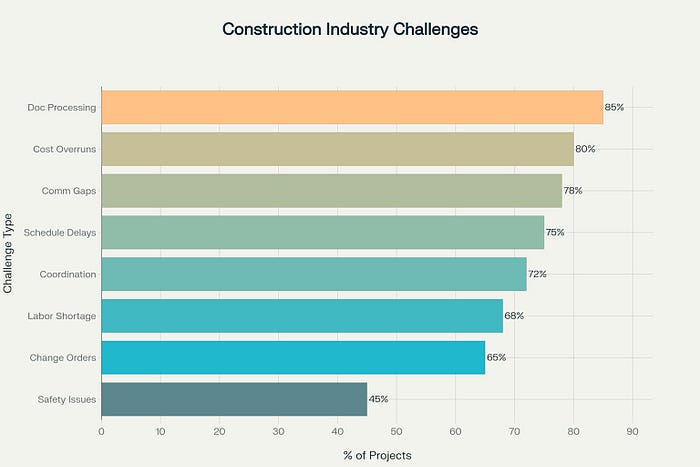
The labor shortage particularly impacts MEP (Mechanical, Electrical, and Plumbing) contractors, where specialized skills are increasingly difficult to find and retain. Simultaneously, the volume of project documentation has exploded, with subcontractors spending significant time parsing through hundreds of pages of specifications, drawings, and change orders to extract actionable information. Traditional approaches to document review, bid preparation, and project coordination simply cannot scale to meet modern construction demands.

Furthermore, the coordination complexity between trades has intensified as building systems become more sophisticated. MEP contractors must navigate intricate relationships between mechanical, electrical, and plumbing systems while ensuring compliance with evolving regulations and sustainability requirements. These challenges create a perfect storm where technological solutions aren’t just beneficial — they’re essential for survival.
Understanding Model Context Protocol in Construction Context
Model Context Protocol represents a fundamental shift in how AI systems interact with domain-specific tools and data sources. Unlike traditional integrations that require custom connectors for each tool combination, MCP provides a universal interface that allows any AI assistant to connect with any structured data source. For construction applications, this means a single protocol can bridge the gap between platforms like Procore, ACC, PlanGrid, and numerous other specialized tools that subcontractors rely on daily.
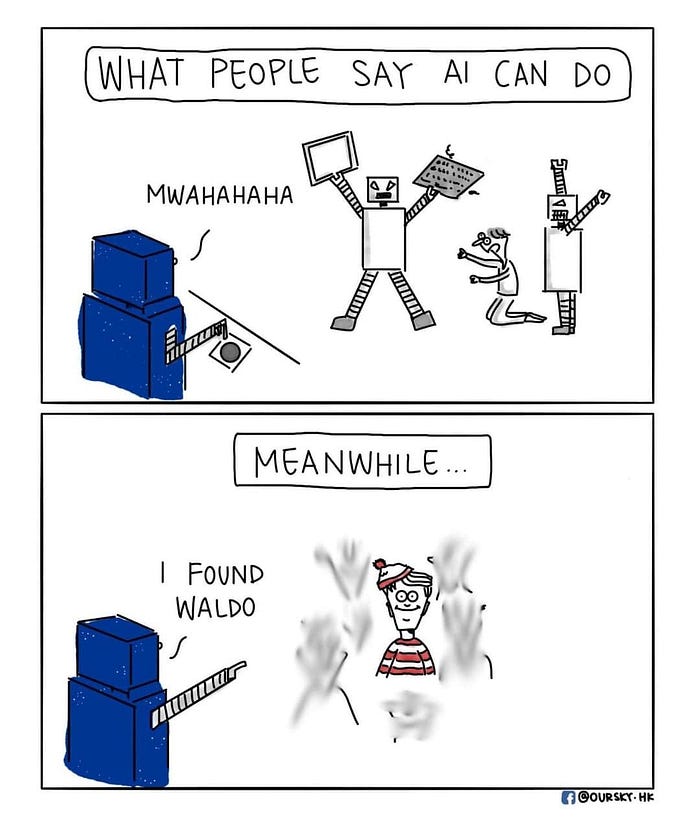
MCP uses a client-server model where construction platforms like Procore act as servers, exposing data through standard interfaces. AI agents, as clients, can then access and act on this data without custom integrations — eliminating the need for countless one-off connections between different systems.
What sets MCP apart is its ability to handle construction’s wide range of data — from BIM models to safety reports — while preserving context. This allows AI agents to make smarter, more informed decisions across complex workflows.

The protocol’s emphasis on security and user control aligns perfectly with construction industry requirements. Subcontractors often work with sensitive project information and proprietary data that requires careful access control. MCP’s design principles ensure that data access is explicitly authorized and that AI interactions remain transparent and auditable.
Technical Architecture and SOTA AI Integration
At PELLES.AI, we’ve designed a cutting-edge technology stack purpose-built to integrate AI into the heart of real-world construction workflows — especially those involving subcontractors. Our architecture doesn’t just use AI for automation; it orchestrates intelligent agents that actively enhance day-to-day subcontractor operations by understanding, generating, and acting on project data.
One component of this system is our implementation of the Model Context Protocol (MCP), which acts as a connective layer between traditional construction tools and our AI agents. MCP servers expose relevant project data — drawings, RFIs, safety logs, and more — by interfacing with robust APIs from major construction platforms.
We leverage deep integrations with tools like Procore (providing access to financials, project management, quality, and safety data) and Autodesk Construction Cloud (offering BIM 360 integration, document handling, and issue tracking). These platforms serve as the core data sources for our intelligent agents to operate effectively..

Our AI layer incorporates state-of-the-art language models. These models are not just for understanding text — they serve as reasoning engines within orchestrated agent frameworks, capable of parsing submittals, interpreting construction drawings, and generating actionable content tailored to specific subcontractor needs.
The real innovation lies in our agentic AI workflows and custom-built agent orchestrations. Unlike passive systems, these agents actively monitor project conditions, process documents, and generate outputs like transmittals, reports, punch lists, and change order recommendations. This allows subcontractors to integrate AI smoothly into existing workflows, improving issue detection, decision-making speed, and compliance.

Real-World Implementation and Results
The practical implementation of MCP-enabled AI systems in construction environments has demonstrated remarkable results across multiple performance metrics. Early adopters report significant improvements in operational efficiency, with some subcontractors achieving 65–80% reductions in administrative overhead. Document processing speed improvements are particularly notable, with AI agents capable of analyzing complex project specifications in minutes compared to the hours required for manual review.
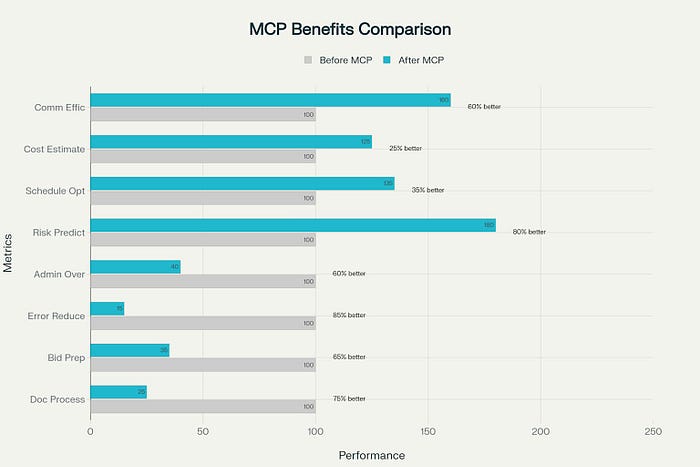
Financial impact studies reveal that subcontractors using MCP-integrated AI systems experience notable improvements in bid win rates and project profitability. The combination of faster bid preparation, more accurate cost estimation, and proactive risk management creates a competitive advantage that translates directly to business growth. Additionally, the reduction in administrative burden allows skilled tradespeople to focus on value-added activities rather than paperwork and coordination tasks.
Future Implications and Industry Transformation
The rise of MCP-enabled AI is set to transform subcontractor operations in construction. Currently, 60% of firms are testing AI, a figure expected to double in two years. As the technology proves its value, it will become as indispensable as mobile devices or project management tools.
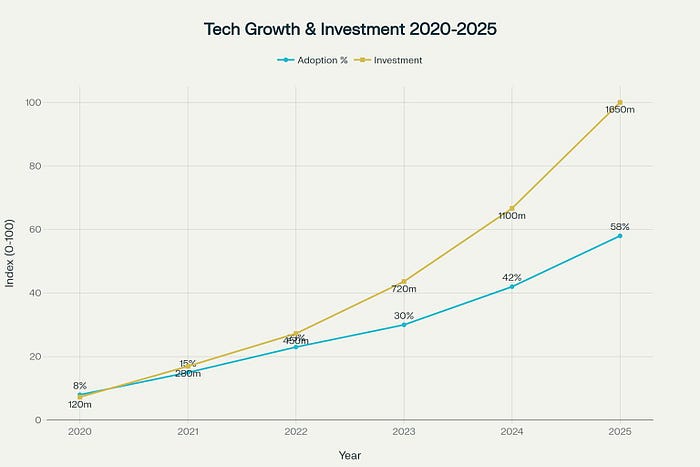
The competitive landscape is already shifting as early adopters gain significant advantages in bid accuracy, project execution speed, and risk management. Subcontractors who fail to embrace these technologies risk being systematically outcompeted by peers who can deliver faster, more accurate, and more cost-effective services. This dynamic creates a powerful incentive for industry-wide adoption, accelerating the transformation beyond what purely market-driven forces might achieve.
Integration standardization through protocols like MCP will likely eliminate many of the current barriers to AI adoption in construction. As more tools become MCP-compatible, the cost and complexity of implementing AI solutions will decrease while their capabilities and value propositions continue to improve.
If you’re interested in using state of the art AI tools to handle really complex tasks, you should check out pelles.ai/careers and apply!
My email is ido.beerie@pelles.ai for any questions or comments.