4 AI Myths Trade Contractors Believe- Busted
 Yael Meretyk HananJan 8, 20265 min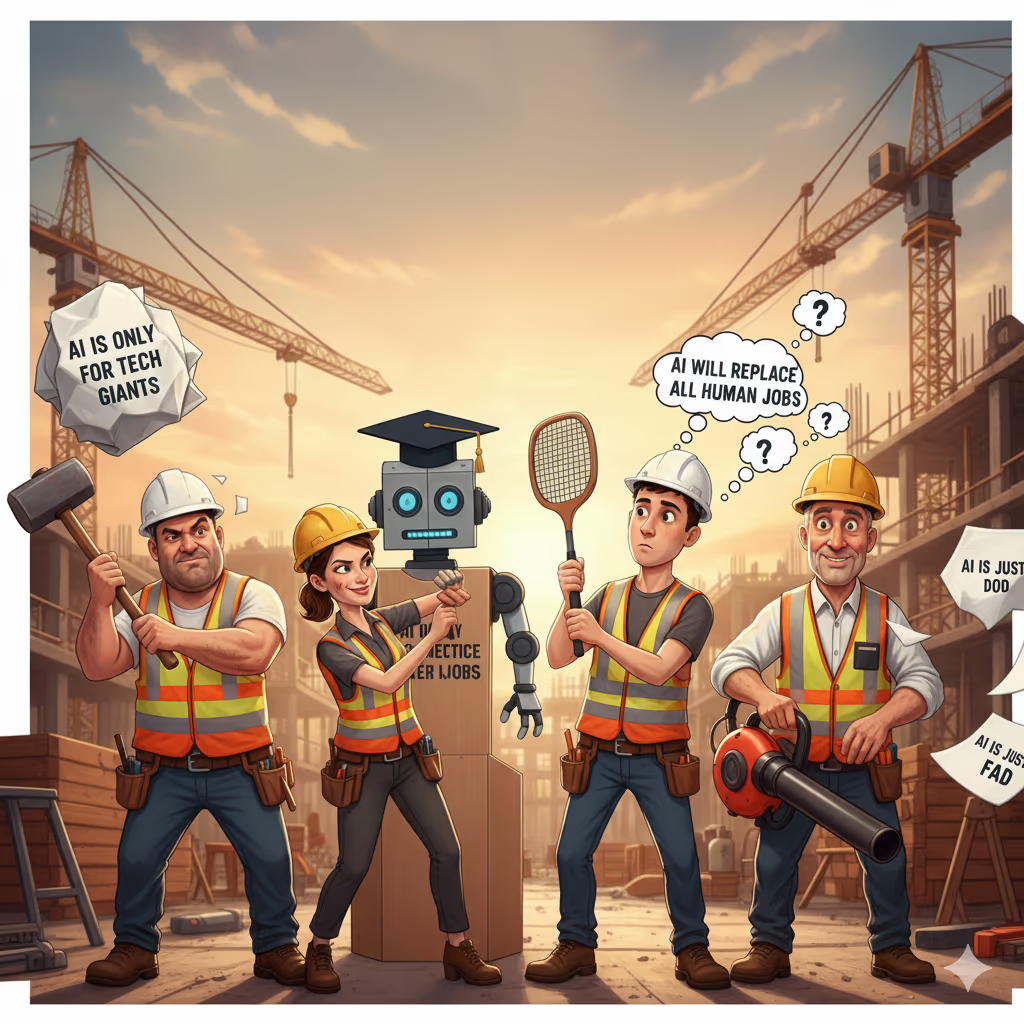
You've heard the buzz.
AI is everywhere. It's in the news. It's in software pitches. It's in conversations at the supply house or the office. And if you're like most trade contractors, your reaction is probably some mix of curiosity and skepticism.
Is this actually useful for my business? Or is this just another tech trend that doesn't understand how construction really works?
Let's clear the air. Below are three of the most common myths we hear from estimators, PMs, and owners, and what's actually true on real construction projects.
Myth #1: "AI is going to take my job"
This concern frequently emerges in construction discussions about artificial intelligence.
Estimators fear replacement. Project managers worry about automated decision-making. Office staff concern themselves with redundancy.
It's a reasonable worry, especially after witnessing poorly implemented technology deployments. However, the reality differs: construction positions aren't vanishing due to AI. Labor shortages are intensifying instead.
Expertise, judgment, and trade knowledge remain scarce commodities. No algorithm can match professionals who interpret specifications carefully, identify scope gaps, and comprehend underlying risks—or those who shepherd projects to successful completion.
What AI genuinely handles is low-value work that consumes your entire day. Duplicating information, locating documents, rereading identical materials repeatedly.
Consider AI as supplementary capacity—the type that never tires from administrative tasks. Pelles.ai handles document-intensive work: extracting critical details from blueprints and specifications, arranging information, monitoring modifications, and producing deliverables. Your team maintains oversight, utilizing expertise where it counts.
"AI doesn't replace humans. It gives them their time back."
Myth #2: "AI is too complicated or too expensive for trade contractors"
Construction technology historically served large general contractors with substantial IT departments. Complex rollouts. Premium costs. Extended timelines before tangible results. Trade contractors lack these resources.
Contemporary, construction-focused AI operates differently.
Pelles.ai integrates into existing trade workflows rather than demanding procedural changes. You contribute documents you handle routinely. The platform assists with extraction, organization, and comprehension—faster. Zero programming required, no protracted implementation.
Benefits materialize quickly:
- Contractors submit more bids without expanding staff
- PMs reduce time locating information or managing documentation
- Office staff eliminate repetitive manual processes
"AI isn't just for big companies anymore. It's finally built for the trades and their specific needs."
Myth #3: "AI can't understand real construction documents"
Opening specification sets illustrates why this myth persists.
Construction documents aren't straightforward. They span hundreds of pages (ideally). Cross-references abound. Self-contradictions exist. Details vanish. Amendment 7 modifies what Amendment 3 previously changed. Most contractors have experienced software claiming construction expertise that collapsed when facing realistic documentation.
The essential distinction: general AI struggles with construction materials. Trade-specialized AI accommodates them.
Tools like Pelles.ai address how specifications, drawings, and amendments genuinely appear. They manage: extensive, disorganized specification sections, industry-specific vocabulary, scope references, and sequential amendments that shift requirements mid-bidding.
Rather than forcing manual PDF searches, AI rapidly identifies pertinent information and presents it to someone equipped to evaluate it.
You maintain review responsibility and decision-making authority. You simply avoid squandering hours searching.
"AI doesn't replace understanding. It speeds up access to it."
Myth #4: "AI is just another piece of software to manage"
This reflects legitimate contractor concerns. Companies face tool abundance but time scarcity. Each platform pledges productivity yet generates additional logins, modified procedures, and fresh learning requirements.
Impractical AI genuinely feels burdensome. That contradicts Pelles.ai's design philosophy. The platform embeds within established processes instead of alongside them. It synchronizes documentation. AI facilitates organization, information extraction, and clarification. Continuous usage allows the system to recognize patterns and preferences. Minimal process restructuring, no platform management required.
Software should vanish into operations, delivering superior information quickly—not demand supervision.
The Bottom Line
"AI doesn't replace your experience. It scales it."
Automation handles documentation, information retrieval, and recurring procedures, freeing experienced personnel for strategy, coordination, relationships, and delivery.
That represents meaningful AI application.
Interested in discovering AI's automation potential for your organization? Book a quick demo with Pelles.ai. Realistic assessment without promotional language—examining practical AI integration into construction workflows.