Making AI work for You: Easier than you imagine


We recently attended the SMACNA Annual Convention. This year it really had some extraordinary content. One of the eye-opening sessions I participated in was “Tech Drive: Revolutionizing Construction Efficiency and Collaboration” delivered by Kipp Ivey, Jeff Sample and Travis Voss.
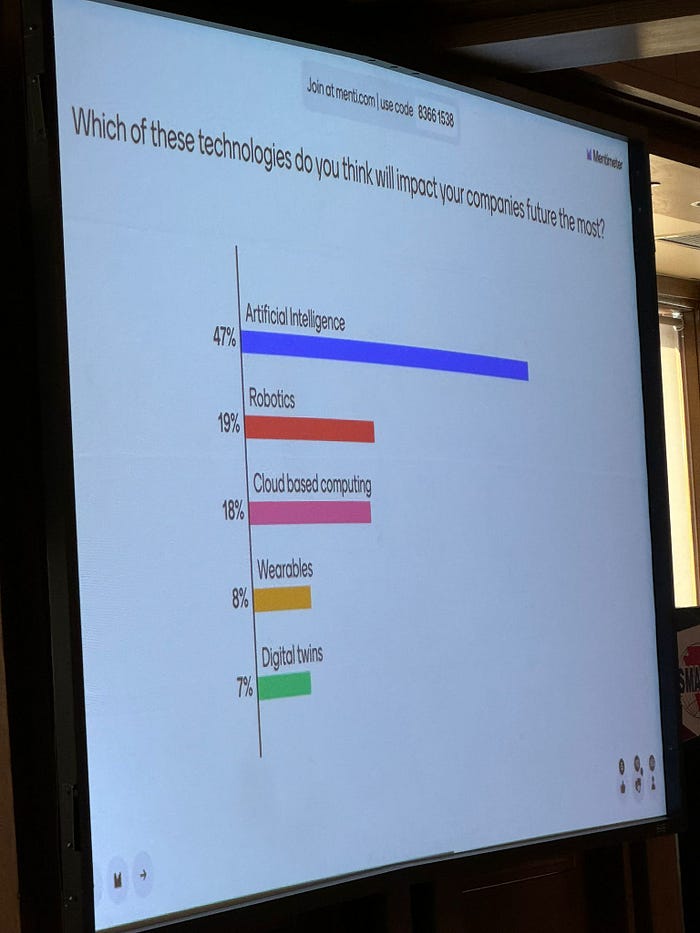
The room was packed. Attendees were asked to weigh in on emerging technologies in real time. The results? A solid 47% believed AI would have the greatest impact on their company’s future. Yet, when asked to rate the difficulty of implementation, AI was rated the second hardest to implement.
In this blog post we’ll address this misconception. We’d like to argue AI is actually easier to implement than most other technologies, and furthermore, that the state of mind should be “start utilizing AI” rather than “implementing AI”.
AI is already built for accessibility
AI tools are designed for seamless integration. Modern AI solutions focus on being intuitive, user-friendly, and adaptable to existing workflows, actually, they were essentially trained on them. Think of them as plug-and-play enhancements rather than disruptive overhauls.
For example, tools like generative AI can help construction teams draft RFIs, summarize complex documents, or generate design variations in minutes — all without requiring coding expertise or deep technical knowledge. With a bit of curiosity and exploration, these tools can provide value from day one.
AI excels at handling unstructured data
One of the longstanding challenges in construction has been managing unstructured and messy data. Unlike “classic” SaaS applications, which often rely on clean, standardized spreadsheets, construction projects generate diverse and complex data from varied sources, such as drawings, specs, emails, and field reports. This lack of uniformity made leveraging digital tools cumbersome and limited their impact.
Large Language Models (LLMs) can process and make sense of disparate sources, extracting insights and generating outputs tailored to specific needs. For example, LLMs can sift through specs, identify different requirements, potential risks, and even contradictions — all without requiring perfectly organized data. By unlocking the value in unstructured information, AI eliminates a significant barrier to adoption and brings unparalleled efficiency to construction workflows.
Tuning and configuring AI is simpler than you’d expect
One of the key challenges with AI is tailoring it to specific tasks, but this process is more straightforward than it seems. In fact, it is simpler than setting your microwave to defrost. By providing the right inputs — like clear examples and feedback — you can “train” AI to align with your needs incrementally, refining its output with each iteration.
This iterative process is particularly useful in construction, where precision matters. Want an AI tool to draft proposals or analyze contracts? Start with simple templates or examples, and gradually introduce nuances.
Implementing AI isn’t black or white
The resources exist — you just need to leverage them
It is important to realize that implementing AI is not a binary operation. You don’t need to implement AI across your entire operation at once. Start small. Automating a single repetitive task can deliver immediate ROI and build confidence to expand adoption.
AI adoption doesn’t mean doing it alone. Vendors, consultants, and even online communities offer support to help teams integrate AI into their workflows. Many tools also provide built-in tutorials, onboarding processes, and support channels to make the learning curve manageable.
Conclusion: AI isn’t just the future; it’s the present
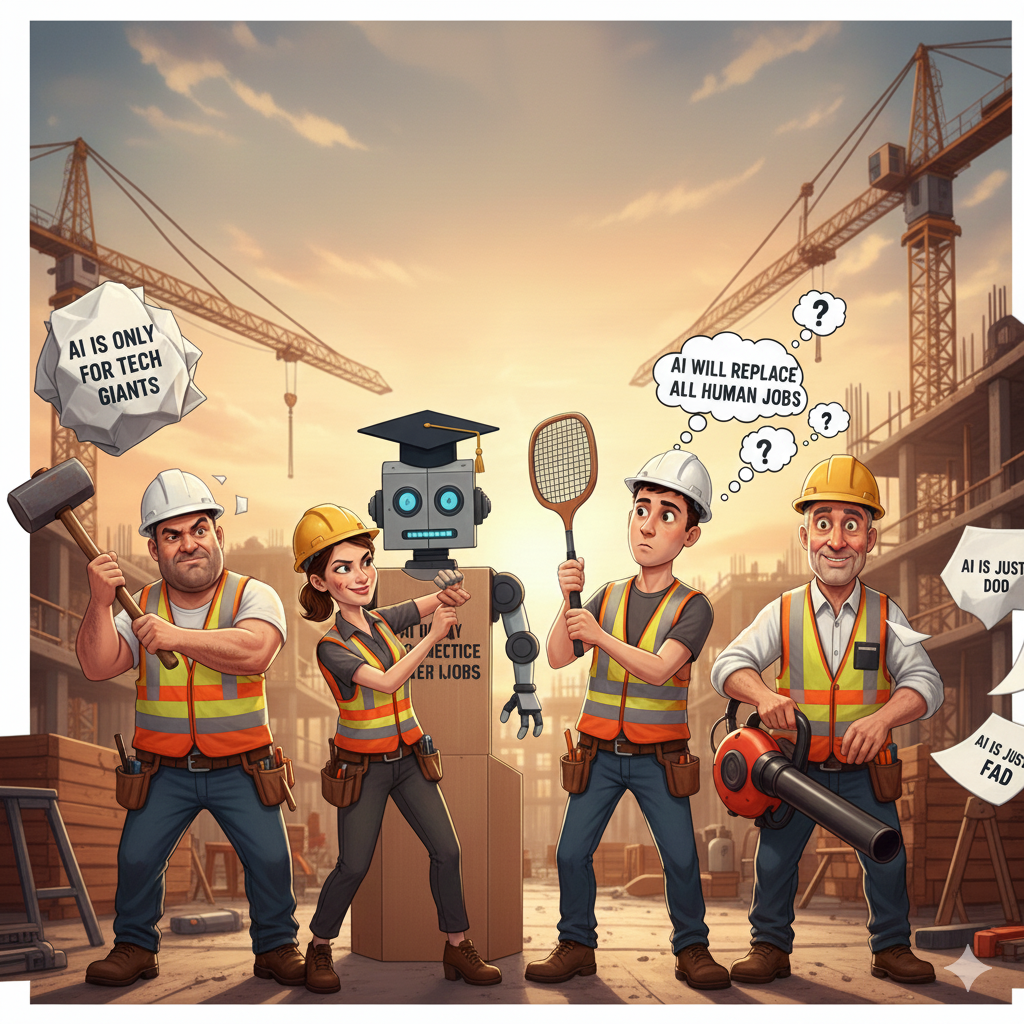
The perception of AI as “hard to implement” comes from a misunderstanding of how accessible the technology has become and that AI is really a technological leap happening mainly behind the scenes, to make end users more productive in their day-to-day workflows. AI is no longer a complex tool reserved for tech giants — it’s a versatile swiss army knife accessible to construction teams of all sizes. With the right approach, even complex-sounding applications like document comparison or predictive analytics can be implemented with minimal disruption.
As AI continues to mature, early adopters who break through this misconception will gain a significant edge. It’s time to demystify AI and embrace the opportunities it offers. After all, the hardest step in any journey is often the first one — but with AI, that step is simpler than you’ve been led to believe.