Cracking AI’s Black Boxes


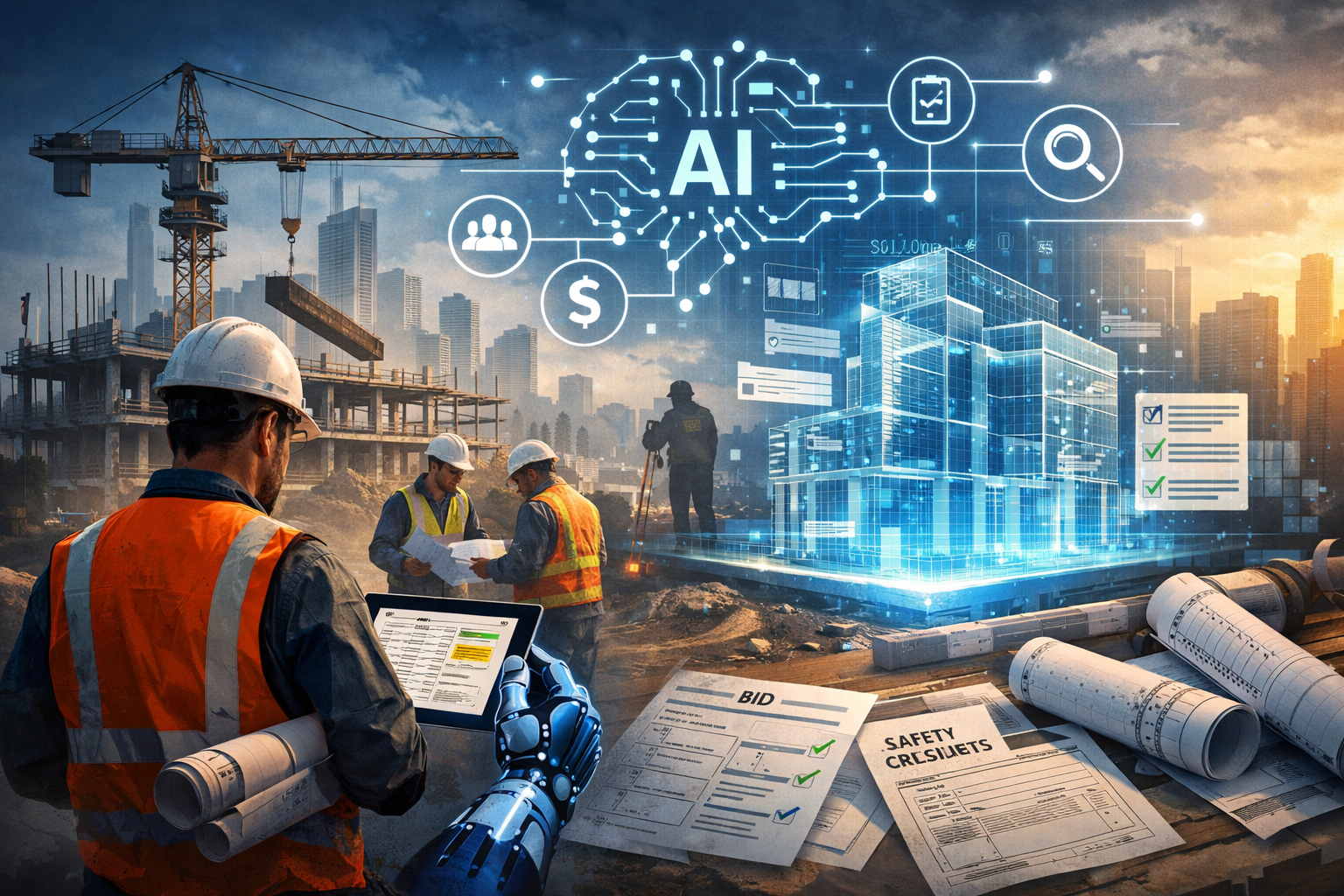
The world of artificial intelligence can often feel like a series of mysterious black boxes — complex systems that produce incredible results, but whose inner workings remain hidden and unclear. To use them in the construction industry, these black boxes might be even more unreliable as the projects are much more complex and the errors are costly. However, the potential they hold is too significant to ignore. What if you could peek inside these black boxes and discover tools that have the potential to revolutionize the way you plan, design, and execute your projects?
In this post, we’ll try to crack open one layer in the “AI black box”, and see how generative models work and how we can better use them. By understanding these advanced tools, you’ll be better equipped to leverage them in your own projects, turning AI’s potential into practical, powerful outcomes.
What Are Generative Models?
Generative models are a class of AI creating new content by learning from existing data. Think of them as the ultimate apprentices who have absorbed the knowledge and experience of countless experts across various domains. Currently, two types of generative models are making waves: Large Language Models (LLMs) and Diffusion Models.
Large Language Models (LLMs)
Imagine having an AI that’s as fluent in construction jargon as your most seasoned PM. LLMs, like OpenAI’s GPT-4, are trained on vast amounts of text data. They can understand and generate human-like text, making them invaluable for tasks like drafting emails, writing reports, or even creating comprehensive spec documentation.
In construction, LLMs can be leveraged to summarize complex construction documents, generate precise proposals, and craft detailed RFIs and RFPs with speed and accuracy. This not only saves time but also reduces the risk of costly human errors.
Diffusion Models
Now, let’s move from words to visuals. Diffusion models are primarily used for generating images and designs. Imagine a team of expert artists — each with their own specialty — working together to perfect a design. That’s how diffusion models operate. These AI models enhance an image iteratively, much like going iteratively from LOD 100 into a 500 masterpiece.
For the construction industry, diffusion models hold a great promise. They can generate multiple design variations in a fraction of the time it would take a human team, allowing for rapid prototyping and more efficient design processes. Whether you’re looking to visualize different routing paths or explore various equipment positioning, diffusion models can significantly speed up decision-making.
Getting the Most Out of Generative Models
While generative models are incredibly powerful, unlocking their full potential requires a bit of finesse — especially in a complex industry like construction. Here are a few tips that can make those AI tools work best for you:
Clear Inputs Are Key
The quality of AI output is only as good as the input it receives. Provide detailed, specific prompts. The more context and clarity you offer, the better the model can generate relevant and high-quality outputs. Don’t hesitate to guide the model with examples of what you like and dislike.
Embrace Iterative Refinement
Generative models are like apprentices; their first attempt might not be perfect. Don’t settle for the first result. Refine and iterate until you get the outcome that meets your standards. Implement feedback loops — evaluate the model’s output, tweak your inputs, and try again until you hit the mark.
Keep the Human Touch
Despite their power, generative models are not infallible. Always review and edit the model-generated content. Human oversight ensures that the outputs are not only accurate but also contextually relevant and aligned with your project’s specific needs.
Conclusion: The Future of Construction Is Here
Generative models like LLMs and diffusion models are more than just technological novelties — they’re transforming the way we approach design, documentation, and problem-solving in construction. By understanding these tools and learning how to use them effectively, you can unlock new levels of efficiency, reduce errors, and stay ahead in an industry that’s rapidly evolving.
That said, current models might not be enough on their own, especially for complex tasks like those in construction. That’s why a more holistic approach is needed.
To see how we handle this at Pelles, check out: www.pelles.ai