Building Smarter, Not Harder: AI’s Role in Preconstruction

Have you seen the billboard challenging ChatGPT to complete a construction project?
That billboard was part of a viral campaign by an employment agency, sarcastically referencing the omnipotence we often attribute to AI.

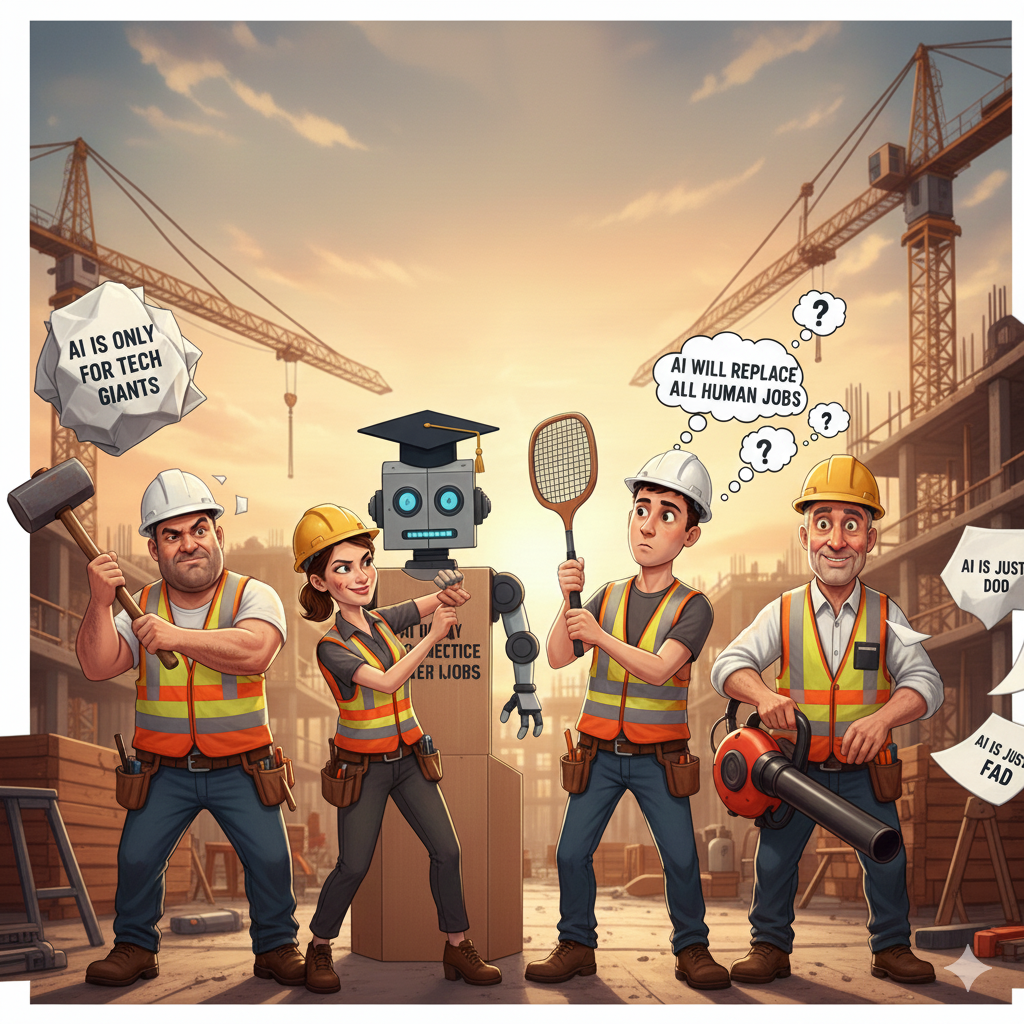
Sure, AI isn’t perfect and it definitely can’t slap bricks together or wire up your house, but it still has transformative potential.
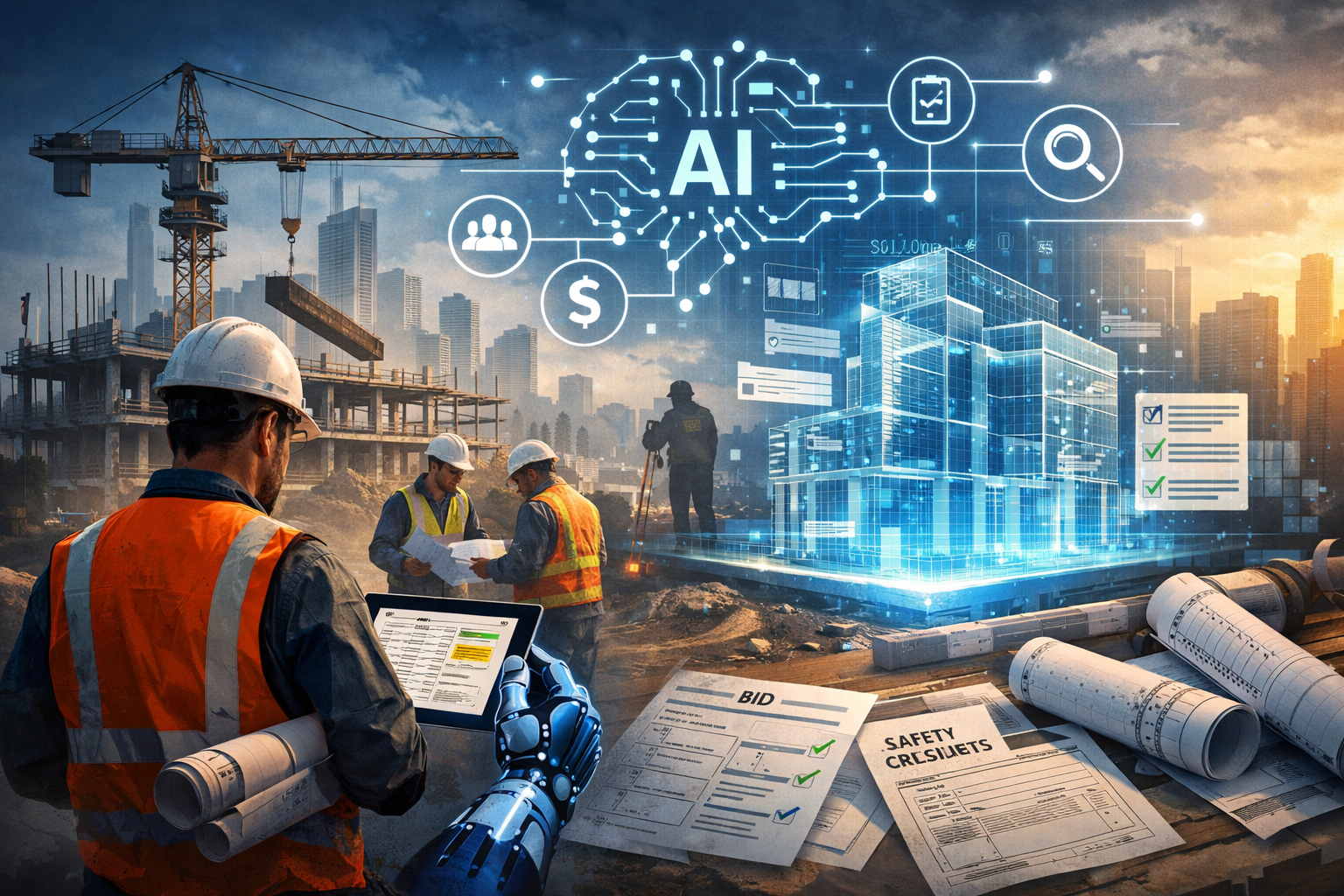
In this blog post, we will understand what AI does best, the hurdles faced during preconstruction, and why AI might just be the superpower subcontractors didn’t know they needed.
AI’s Forte: Analysis, Prediction, and Optimization
At its core, AI excels in processing vast amounts of data to identify patterns, predict outcomes, and optimize processes. From sifting through historical project data to forecast timelines and budgets, to simulating thousands of design variations to identify the most efficient one, AI’s ability to handle complexity and churn out insights in seconds is unmatched.
AI is also very effective at automating repetitive tasks. It applies its learnings to automate tasks that follow a predictable pattern. Leveraging its consistency, accuracy, speed, and ability to handle volume increases the results for automating redundant, tedious tasks are remarkable.
The Preconstruction Puzzle for Trade Contractors
Preconstruction is an important phase in any construction project lifecycle. Though often referred to as “free-con” as it comes without direct charge to the client, it is critical for setting the groundwork for a project’s success.
The base for the precon stage is construction documents, usually in the form of PDFs, containing huge amounts of data. Contractors, who always deal with a labor shortage of skilled workers have to go through it on extremely tight schedules and complete the different precon tasks. These tasks vary and include takeoff and estimation, budgeting, scheduling, material selection, and design. In this complex puzzle, each piece must fit.
Why AI is a Game-Changer
Understanding the strengths of AI and the challenges of precon leads to an obvious conclusion - AI can transform the way contractors handle preconstruction processes:
- Precision Planning: AI can analyze project data and generate precise takeoff and estimates of time, cost, and materials, reducing uncertainties and helping contractors bid more competitively.
- Design Optimization: Through generative design algorithms, AI can propose the most efficient and cost-effective design layouts that comply with regulations and fit all the project requirements.
- Risk Mitigation: By identifying potential bottlenecks and conflicts in the design phase, AI helps avoid costly mid-construction changes or rework.
AI can automate tasks and workflows — leaving contractors to do what they do best: build buildings and forge relationships.
The Road Ahead
The premise of an AI finishing a building may seem far-fetched, but it invites us to reimagine AI’s role in construction.
According to the employment agency ad:
“AI can do a lot. But AI… can’t fix a leak or install a heating system neither. Crafts(wo)men are here to stay, and they deserve to be recognized. Their skills are simply irreplaceable”.
And while we do agree that AI can’t replace most of the roles in construction, it can offer contractors tools to navigate their unique challenges with greater ease and efficiency. Its ability to enhance decision-making, streamline processes, and foster innovation is paving the way for a new era in construction. The future is not about AI replacing humans but empowering them to build smarter, faster, and more sustainably.
As we continue to explore the frontiers of AI in construction, let’s remember that technology’s true potential lies not in the tasks it can perform independently. Instead, it lies in how it enhances our capabilities, workflows, and creativity.