The 2026 Trade Workforce: Where Experience Meets Practical Tech
 Yael Meretyk Hanan6 min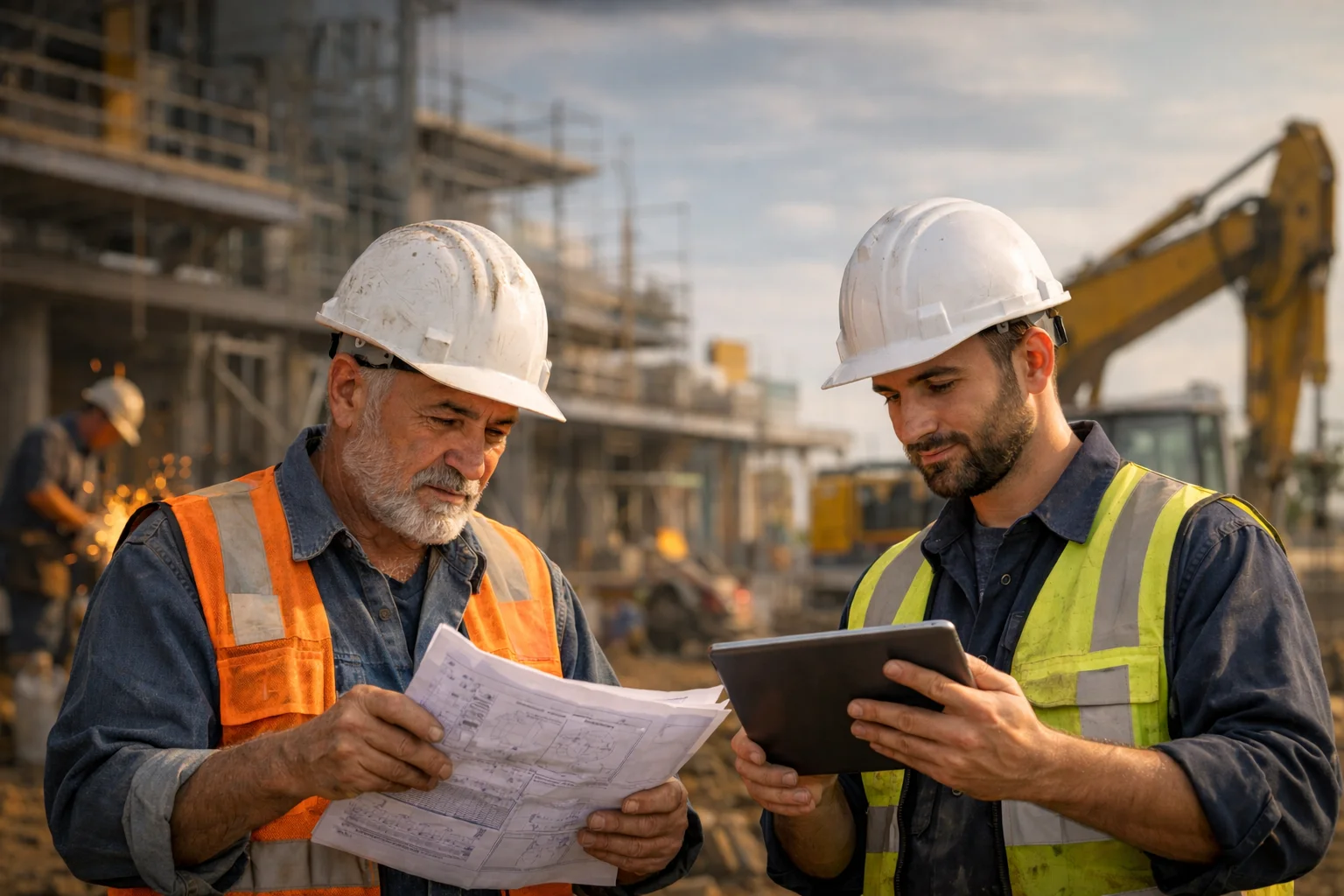
Walk onto almost any jobsite today and you will see the shift immediately. A superintendent with three decades in the trade flips through plans on a tablet. An estimator who learned the business with highlighters and scale rulers now works alongside someone who has never known a world without digital takeoffs.
The trade workforce is changing fast. But the foundation has not moved.
Experience still runs the job. Craft still matters. Judgment still decides whether a project makes money or not. What has changed is how that experience gets supported, shared, and scaled. In 2026 and beyond, the contractors who stay competitive will not be the ones choosing between people and technology. They will be the ones using both, together.
The Veteran Advantage Still Drives the Industry
No matter how advanced tools become, the trades are still powered by people who have seen it all before.
Veteran tradespeople bring something that cannot be trained overnight or downloaded into software. They know when drawings do not tell the full story. They can sense risk before it turns into a schedule overrun. They recognize coordination problems long before they show up in the field, and they understand from hard-earned experience how crews actually perform under real-world conditions, not how a schedule says they should.
This kind of judgment is the backbone of every successful contractor. The challenge is not that it is becoming less valuable. The challenge is that it is harder to protect and pass down experience when those same experts are spending hours buried in paperwork, chasing documents, or retiring from the workforce.
A New Generation Brings a Different Baseline
At the same time, a younger workforce is stepping into the trades with a very different approach to technology.
They are comfortable working digitally. Specs, drawings, markups, schedules, and communication all live on screens, and they expect them to be fast, searchable, and connected. Manual prep work, duplicated effort, and digging through PDFs feels unnecessary to them, not just inefficient.
This is not a threat to the trades. It is an opportunity.
When younger professionals are paired with seasoned trade judgment, teams move faster and make better decisions. But that only works if everyone is operating inside tools that make sense for how construction actually runs, not systems that force people into workarounds or slow down the people who know the most.
Where Experience and Technology Actually Work Together
There is a common fear that technology, especially AI, is meant to replace skilled tradespeople. That fear is understandable. But it misses the reality of how good tools are actually used on real projects.
AI does not walk jobsites. It does not make judgment calls. It does not understand nuance the way experienced tradespeople do.
What it does well is remove friction. AI can read specs and addenda instantly. It can extract scope details without missing critical pages. It can organize information so people do not waste hours preparing documents or hunting for answers. It can generate reports. In practice, it functions like a tireless apprentice, handling repetitive, time-consuming work so experienced professionals can focus on what actually matters.
That is where the value is. Technology handles the busywork. People handle the craft.
The Real Collaboration Challenge on Today's Jobsites
The biggest challenge facing the modern trade workforce is not age or attitude. It is alignment.
Too often, experienced professionals are pushed into clunky software that does not reflect real workflows. At the same time, younger team members are expected to translate unwritten knowledge that lives in someone else's head. When teams do not share the same tools and systems, experience stays siloed, knowledge transfer breaks down, and mistakes get repeated job after job.
The answer is not more software. It is better software built specifically for the trades, around how work actually gets done.
How Pelles.ai Supports the Entire Trade Workforce
Pelles.ai is built for this exact moment in the trades.
It respects the reality that experience is irreplaceable, and it recognizes that modern tools should amplify that experience, not fight against it. Pelles.ai turns real-world trade knowledge into structured, usable information that entire teams can act on.
Veteran estimators spend less time prepping documents and more time reviewing strategy. Project managers get clarity faster instead of chasing details. Younger team members work with clean, actionable outputs instead of raw PDFs and guesswork. Everyone operates from the same source of truth.
Upload the spec. Get usable data. Make better decisions sooner, without a steep learning curve or unnecessary complexity.
That is what practical AI looks like when it is actually built for the trades.
The Strongest Trade Teams Use Both
The future of the trades is not about choosing between experience and technology.
It is about protecting craftsmanship while giving it better tools. It is about letting seasoned judgment lead and letting technology remove the friction that slows teams down.
The contractors who win in 2026 and beyond will be the ones who honor experience, empower younger talent, and eliminate the paperwork bottlenecks that drain time and margins today.